How Much Emergency Savings Does a Freelancer Need?
How many months of savings a freelancer needs, how to set a target from essential expenses, and how to build it on an irregular income.
In this guide
Earning money is only half of financial security for a freelancer. The other half is having money available when work slows down or something unexpected happens.
You might have several regular clients today, but there’s no guarantee they’ll all have work for you next month. Projects get cancelled, payments get delayed and personal emergencies arrive without warning. That’s why emergency savings matter even more for people who rely on freelance income.
So how much should a freelancer save? Three months of expenses? Six? More? The answer depends on how stable your income is, how many people depend on you and how much you spend each month.
The basic emergency fund rule
General financial advice is to keep three to six months of essential living expenses in emergency savings. It’s a useful starting point, but it may not be enough for every freelancer.
Unlike salaried employees, freelancers don’t get a guaranteed monthly salary or paid leave. If you lose a major client, it can take weeks or months to replace them. So freelancers with unpredictable income usually need a larger fund.
A practical guide:
| Target | Suits freelancers who… |
|---|---|
| 3 months | have stable, repeat clients and low monthly expenses (a starting goal) |
| 6 months | have moderate swings in income (a sensible target for most) |
| 9–12 months | have very irregular income, dependants or few other income sources |
These are planning guidelines, not fixed rules.
Calculate your essential monthly expenses
Before you set a target, work out how much you need to cover the basics. Include:
- Rent or housing payments
- Groceries and household essentials
- Electricity, gas, water and internet
- Medical costs and medicines
- Transport
- Education costs
- Insurance and minimum debt payments
- Other essential family responsibilities
Leave out non-essentials like entertainment, holidays and other optional spending. Your emergency fund should cover what you need to keep a reasonable standard of living through a hard period.
Say a freelancer in Pakistan has essential expenses of Rs. 80,000 a month:
| Emergency fund period | Savings target |
|---|---|
| 3 months | Rs. 240,000 |
| 6 months | Rs. 480,000 |
| 9 months | Rs. 720,000 |
| 12 months | Rs. 960,000 |
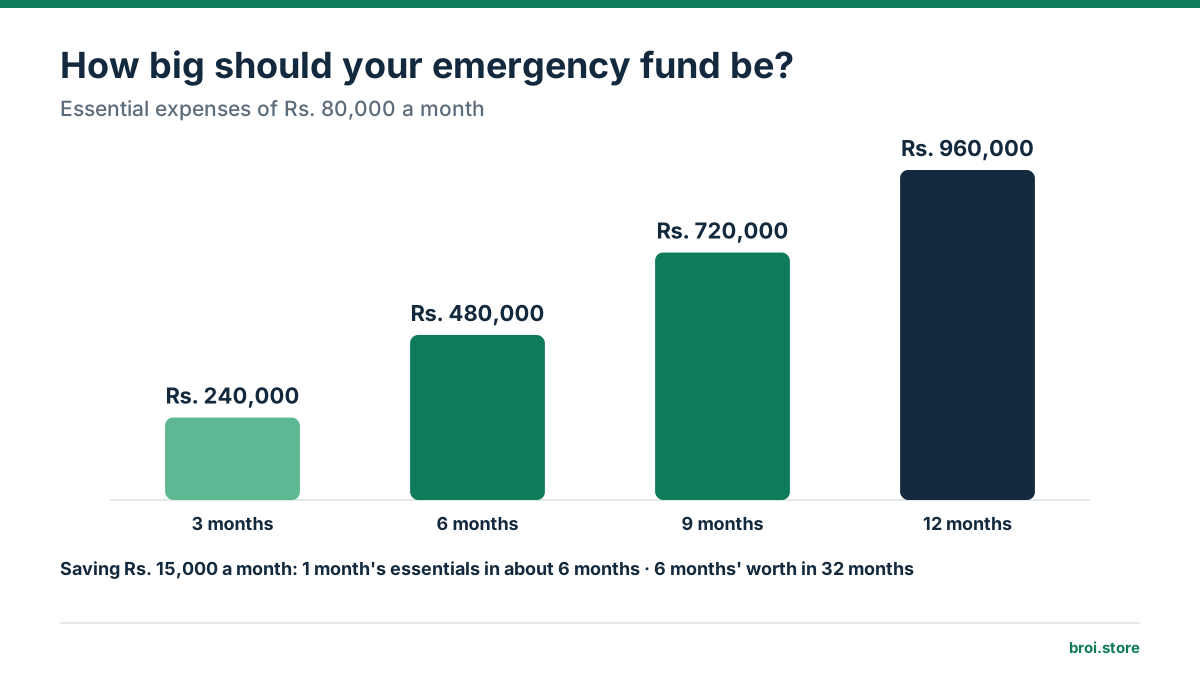
That turns a vague intention to “save more” into a clear, measurable goal. The Freelancer Budget & Emergency Fund Calculator calculates your own target and how long it will take to reach it.
Why freelancers may need more savings
Several things outside your control can hit freelance income:
Client cancellations. A client can stop a project or decide not to renew. If they made up a large share of your income, the impact is immediate.
Delayed payments. International clients and platforms have their own payment schedules. Even after the work is done, you may wait before the money reaches your bank. Fiverr, for example, holds earnings for 14 days after an order completes for most sellers.
Changing demand. Some services are seasonal. Businesses may cut marketing budgets in slower periods, for example.
Unexpected costs. A broken laptop, internet problems, a medical emergency or a family responsibility can demand money immediately.
An emergency fund lets you handle these situations without borrowing in a hurry or accepting badly paid projects out of desperation.
How to build an emergency fund on an irregular income
You don’t need to save the full amount at once. Building an emergency fund is gradual.
A practical method is to save a fixed percentage of every payment. When a client pays you Rs. 100,000, move Rs. 10,000 to Rs. 15,000 into your emergency savings straight away. Save more when a larger payment arrives; in slower months you can reduce the amount without breaking the habit.
How long will it take? If you save an average of Rs. 15,000 a month:
| Goal | Target | Time to reach it |
|---|---|---|
| 1 month of essentials | Rs. 80,000 | about 6 months |
| 3 months | Rs. 240,000 | 16 months |
| 6 months | Rs. 480,000 | 32 months |
That can feel slow, so use good months to speed it up (see below).
Tips to make steady progress:
- Start with a small first goal. Aim for one month of essential costs before thinking about six or twelve.
- Save before you spend. Move your savings as soon as a client pays, before money gets absorbed into daily spending.
- Keep it separate. A separate bank account makes it less tempting to dip into.
- Use extra income wisely. When you get a bonus, finish a big project or earn more than expected, send part of it to your emergency fund.
- Review your target. If your rent, family responsibilities or major expenses change, update your goal.
Paying yourself a fixed salary also helps build a buffer automatically. See How to Budget With Irregular Income.
Where should you keep your emergency fund?
Your emergency fund needs to be safe and easy to access, not invested in something volatile. A separate savings account at your bank is the simplest option. If you earn in dollars, you might keep part of your emergency fund in a foreign-currency account, but remember that exchange rates move both ways. We discuss the trade-offs in Convert Your Dollars or Hold Them?.
When should you use it?
Only for genuine emergencies: a lost client, a medical bill, a broken laptop you need for work, or a month with no income. Not for holidays or planned purchases. If you do use it, make rebuilding it your first priority once income returns.
Frequently asked questions
How many months of savings should a freelancer have?
Most freelancers should aim for at least six months of essential expenses. Three months is a good first goal; nine to twelve months is safer if your income is very irregular or people depend on you.
Should my emergency fund cover business expenses too?
If you need certain tools or subscriptions to keep earning, such as software or hosting, include them in your essential monthly costs.
Is it better to save in rupees or dollars?
Your expenses are mostly in rupees, so keeping at least part of your emergency fund in rupees avoids exchange-rate risk when you need the money. Holding some dollars can make sense if you have dollar expenses.
Should I pay off debt or build an emergency fund first?
Many people build a small starter fund of about one month’s essentials first, so a surprise expense doesn’t push them further into debt, then focus on high-interest debt before growing the fund further.
Final thoughts
For freelancers, an emergency fund isn’t a luxury. It’s what lets you turn down a bad project, survive a quiet month or replace a laptop without panic. Work out your essential monthly costs, choose a target that fits how stable your income is and save a fixed share of every payment until you get there.
Start small, stay consistent and use your good months to speed things up.
Sources
Run your own numbers
Find a safe salary from uneven income and how long your emergency fund will take.
Open the Freelancer Budget & Emergency Fund Calculator